Dekabi Stem Cell Clinic in Gangnam, Seoul · Trusted Regenerative Medicine Over 22 Years


Regenerative Medicine Guide
Stem Cells for Improving Skin Tone and Texture Without Surgery
Discover how stem cells improve skin tone and texture without surgery. Boost collagen, reduce wrinkles, and rejuvenate your skin naturally. Learn more today!
Schedule a ConsultationStem Cells for Improving Skin Tone and Texture Without Surgery

At Dekabi Stem Cell Clinic in Seoul — a leader in regenerative medicine with over two decades of expertise — we’ve witnessed a paradigm shift in aesthetic care. Rather than addressing only the cosmetic appearance of aging skin, advances in regenerative science allow us to treat the biological causes of skin aging itself. This means the difference between camouflaging skin concerns and healing skin tissue at the cellular level.
This article explains, in clinical depth and biological detail:
- Why skin tone and texture deteriorate with age
- What stem cells are and how they influence skin biology
- Mechanisms by which stem cells support skin regeneration
- Delivery methods used in regenerative dermatology
- Safety, clinical evidence, and real‑world outcomes
- How Dekabi integrates stem cell therapy into personalized anti‑aging care
By the end, you’ll understand why stem cell therapy is not a cosmetic trick — it’s a regenerative medical intervention designed to restore skin health from the inside out.
The Biology of Skin Aging: What Happens at the Cellular Level
To appreciate how stem cells help, we must understand why skin tone and texture change with age.
Aging skin is the product of both intrinsic (chronological) aging and extrinsic (environmental) aging:
1. Decline of Structural Proteins
The dermis — the layer beneath the surface of the skin — contains collagen and elastin, which provide:
- Strength
- Elasticity
- Resilience
With age:
- Fibroblasts (the cells that synthesize collagen and elastin) become less active.
- Matrix metalloproteinases (MMPs), enzymes that break down collagen, are upregulated.
- Dermal extracellular matrix (ECM) density declines.
Result: Skin becomes thinner, less firm, more wrinkled, and uneven in texture.
2. Pigmentary Changes and Melanin Dysregulation
Pigmentation — including age spots, freckles, and uneven tone — results from melanocyte (pigment‑producing cell) regulation.
With exposure to:
- Ultraviolet (UV) light
- Oxidative stress
- Chronic inflammation
Melanocytes can:
- Produce excess melanin
- Distribute pigment unevenly
Outcome: uneven tone and areas of hyperpigmentation.
3. Dermal Microcirculation Decline
Healthy skin relies on robust microvascular networks for:
- Nutrient delivery
- Oxygenation
- Waste removal
Age reduces:
- Capillary density
- Perfusion efficiency
Result: dullness, less vibrant tone, slower healing.
4. Epidermal Turnover Slows
Young skin regenerates rapidly:
- Dead cells are shed
- New keratinocytes rise from the basal layer
With age:
- Turnover slows
- Dead surface cells accumulate
- Skin appears rough and lackluster
5. Inflammaging and Oxidative Stress
Chronic, low‑grade inflammation — termed inflammaging — affects every layer of the skin.
Contributors include:
- UV exposure
- Pollution
- Reactive oxygen species (ROS)
- Glycation (sugar‑induced protein damage)
Inflammation:
- Degrades ECM
- Increases pigmentation irregularities
- Impairs repair mechanisms
What Are Stem Cells? Clinical Definition and Relevance to Skin
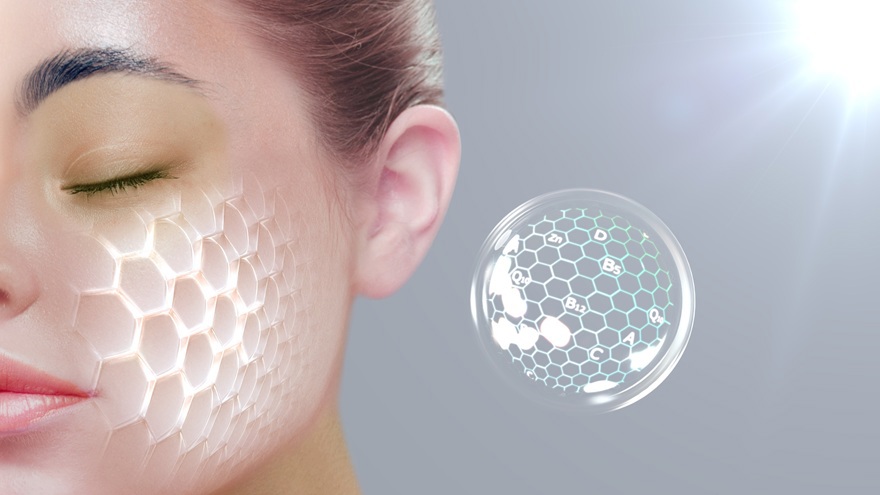
Stem cells are undifferentiated cells with two key capabilities:
Self‑renewal: They can replicate without limit.
Differentiation potential: They can develop into multiple specialized cell types.
Those used in regenerative dermatology are typically mesenchymal stem cells (MSCs) — multipotent cells found in:
- Bone marrow
- Adipose (fat) tissue
- Umbilical cord tissue
Why MSCs Are Ideal for Skin Regeneration?
MSCs are not primarily used because they become skin cells — they are used because they exert powerful paracrine effects: they secrete biological signals that influence nearby cells and tissues.
Key features:
Anti‑inflammatory cytokines
Growth factors that support:
collagen synthesis
elastin maintenance
angiogenesis (new capillary formation)
Immunomodulatory effects that calm chronic dermal inflammation
In essence, MSCs — and their secreted factors — function as biological conductors, instructing damaged or aging skin cells to rejuvenate, repair, and heal.
What Are Exosomes and the Secretome?
In recent years, research has identified that much of the regenerative power of stem cells comes from exosomes and the broader secretome — tiny vesicles and signaling molecules that stem cells release.
These nanovesicles:
- Carry proteins, lipids, and genetic messages (miRNA)
- Influence tissue repair remotely
- Activate resident skin cells without requiring direct cell replacement
This is critical because therapeutic benefit can be achieved without transplanting whole living cells, offering safety and precision.
Mechanisms by Which Stem Cells Improve Skin Tone and Texture
1. Stimulating Collagen and Elastin Production
One of the most robust effects seen in both research and clinical application is increased dermal ECM synthesis.
MSCs and their exosomes:
- Activate fibroblasts to produce collagen types I and III
- Inhibit fibroblast senescence
- Reduce expression of MMPs that degrade ECM
This leads to:
- Improved dermal thickness
- Smoother surface architecture
- Reduction in fine lines and roughness
2. Regulating Melanocyte Function
UV exposure and chronic inflammation disrupt melanocyte activity.
Stem cell signals:
- Reduce oxidative stress
- Suppress inflammatory cytokines (e.g., TNF‑α, IL‑6)
- Normalize pigment production
The result is:
- More uniform melanin distribution
- Gradual fading of hyperpigmented patches
- More even overall tone
3. Enhancing Microvascular Circulation
Healthy microcirculation supports:
- Oxygen delivery
- Nutrient exchange
- Efficient metabolism
Regenerative factors like VEGF encoded in the stem cell secretome:
- Stimulate angiogenesis
- Improve perfusion
- Enhance radiance and “glow”
4. Accelerating Cellular Turnover and Healing
MSCs release:
- EGF (Epidermal Growth Factor)
- FGF (Fibroblast Growth Factor)
- TGF‑β (Transforming Growth Factor‑β)
These molecules:
- Promote keratinocyte proliferation
- Speed surface renewal
- Improve texture and surface smoothness
5. Calming Inflammation and Oxidative Stress
Chronic inflammation deteriorates collagen and elastin and triggers uneven tone.
Stem cell–derived anti‑inflammatory cytokines (e.g., IL‑10) reduce:
- Pro‑inflammatory mediators
- ROS accumulation
- Chronic dermal stress
This supports:
- Fewer visible signs of irritation
- Less reactive pigmentation
- Healthier skin at rest
Clinical Delivery Methods: How Regenerative Therapies Are Applied
At Dekabi, treatment is personalized and evidence‑based. Key regenerative delivery methods include:
1. Intravenous MSC Infusion (Systemic Rejuvenation)
Primarily used for:
- Whole‑body anti‑aging support
- Enhanced vascular function
- Immunomodulation
Benefits include:
- Systemic reduction in chronic inflammation
- Improved overall skin biology
- Support for internal factors influencing skin (e.g., microcirculation, metabolism)
2. Localized MSC Injection
Targeted delivery directly into the dermal tissue:
- Fine lines
- Areas of laxity
- Texture irregularities
Local injections deposit regenerative cells/exosomes where they are most needed and allow concentrated signaling.
3. Microneedling with Exosome Application
Microneedling itself creates microchannels in the skin. Combined with exosomes:
- Penetration of regenerative signals increases
- Micro‑repair mechanisms are activated
- Healing pathways are enhanced
This is especially effective for:
- Surface texture improvement
- Fine scars
- Dull, uneven tone
4. Topical Exosomes and Secretome‑Enhanced Serums
Used in conjunction with in‑office procedures or alone, topical formulations help maintain:
- Collagen support
- Anti‑inflammatory effects
- Tone evening
These serums contain purified exosomes and growth factors optimized for dermal absorption.
Integrative Regenerative Care at Dekabi Stem Cell Clinic

Dekabi takes a systems biology approach — because skin health is deeply interconnected with:
- Hormonal balance
- Inflammation
- Metabolic health
- Oxidative stress
- Immune function
We integrate:
- Comprehensive metabolic panels
- Nutritional assessment
- Hormonal evaluation
- Oxidative stress testing
…to create a multifaceted anti‑aging strategy tailored to the individual.
Clinical Evidence and Outcomes
Clinical studies show that:
- MSC therapy increases dermal thickness and elasticity
- Exosome application improves texture and reduces pigmentation irregularities
- Regenerative therapies demonstrate lasting biological changes — not temporary cosmetic effects
We consistently monitor outcomes using:
- Digital dermal imaging
- 3D texture analysis
- Pigmentation mapping
- Elasticity and hydration metrics
Patients often notice:
- Significant brightness improvement
- Enhanced smoothness and softness
- More uniform tone
- Reduced fine lines
Most changes emerge gradually — with true biological remodeling appearing over 8–12 weeks.
Safety Profile and Clinical Considerations
1. Safety
Stem cell and exosome therapies used at Dekabi are:
- Prepared in clinical‑grade labs
- Screened for purity and absence of pathogens
- Delivered under sterile conditions
Adverse events are rare and usually mild (e.g., temporary redness).
2. Efficacy Variation
Results depend on:
- Age and baseline skin condition
- Environmental exposures
- Metabolic and hormonal health
- Treatment adherence
Because regenerative therapies target biology rather than surface alone, improvements tend to be more enduring than cosmetic procedures.
Comparing Regenerative Therapy to Traditional Aesthetic Methods
| Feature | Topical Skincare | Laser/Peels | Fillers/Botox | Stem Cell Regeneration |
|---|---|---|---|---|
| Invasiveness | None | Medium | Low | Low |
| Downtime | None | Moderate | None | Minimal |
| Surface Effect | Yes | Yes | Yes | Yes + Biological Repair |
| Collagen Rebuilding | No | Stimulated | Temporary | Directly promoted |
| Longevity of Results | Short | Moderate | Temporary | Long‑term remodeling |
Stem cells target the biological mechanisms that underlie aging changes, rather than just masking symptoms.
Questions Patients Ask Most Often
Q: How long before I see results?
A: Initial glow in 2–3 weeks; deeper remodeling in 8–12 weeks.
Q: Is it painful?
A: Most treatments are well‑tolerated; topical numbing is used when needed.
Q: Can stem cells lighten dark spots?
A: Yes — not by bleaching but by regulating pigment production and supporting repair processes.
Q: Are the results permanent?
A: Changes reflect biological repair and can be long‑lasting; maintenance enhances longevity.
Conclusion: Regenerative Skin Science for Lasting Beauty
At Dekabi Stem Cell Clinic, we view skin tone and texture not as superficial cosmetic traits, but as expressions of underlying biological health. Stem cell therapies — especially when informed by metabolic, hormonal, and inflammatory context — are reshaping how aesthetic medicine is practiced.
By stimulating:
- collagen and elastin synthesis
- vascular renewal
- pigment regulation
- inflammation resolution
- cellular turnover
…we help patients achieve results that are natural, scientifically grounded, and enduring — all without surgery.
Regenerative medicine is not just better aesthetics — it’s restorative biology applied to aging skin.
More Medical Articles
Continue exploring our evidence-informed stem cell and longevity guides.

Safety, Ethics, and Innovation: Why Dekabi is the Most Trusted Name in Korean Stem Cell Therapy
For international patients, choosing a stem cell clinic is a high-stakes decision often clouded by skepticism and regulatory confusion. This article positions Dekabi Stem Cell Clinic not just as a medical provider, but as a global leader in ethical regenerative science.
Learn More

The Shift to Autologous Stem Cell Therapy in Korean Pain Care
Discover why Autologous Stem Cell Therapy is the new standard for pain care in Korea. Compare costs, outcomes, and root-cause healing at Dekabi Clinic.
Learn More

What to Expect from Stem Cell Therapy for Diabetes Patients?
Explore what to expect from stem cell therapy for diabetes patients—benefits, process, and outcomes of this innovative treatment. Learn more today.
Learn More